
What Is Heart Rate Variability?
Do We Need To Care?

I’ll be honest for a while I thought this heart rate variability (HRV) stuff was just how fast we are able to get our heart rates down after exerting ourselves. I’ve learned since that there is a lot more involved to HRV than just being able to recover.
A lot of people have been chatting about HRV. I’m getting plugs from my wearables (Garmin watch and Oura ring), my clients are asking about it, it seems to be a new fad of fitness knowledge. So after all this talk, I want to do my own research and see exactly what it is and if it’s something we really need to monitor.
The Skinny On HRV:
The amount of time between each of our heart beats is different. Milliseconds difference.
We have our autonomic nervous system which works on its own and there are two parts. The parasympathetic and sympathetic. Parasympathetic is rest and digest (think restorative and calming). The Sympathetic is fight or flight (exercising).
Sympathetic wants a faster heart beat and parasympathetic wants a slower heart rate.
So the constant fight between these two is what makes up the variability. As popular as the metaphor may be, a healthy heart doesn’t beat as regularly as a metronome. In fact, it changes its rhythm with each beat. Heart rate variability, or HRV, is a measure of the constant variation in milliseconds between your heartbeats.
Some situations increase variation, leading to a higher HRV, while others cause the time intervals between beats to stay more consistent, leading to a lower HRV.
So why measure it at night or in the morning when there is no chance of fighting? It’s even during that time that our body’s nervous system’s (parasympathetic and sympathetic) are toggling back and forth and the measurement of that is our Heart Rate Variablity.
Morning is an average of the day’s up and downs.
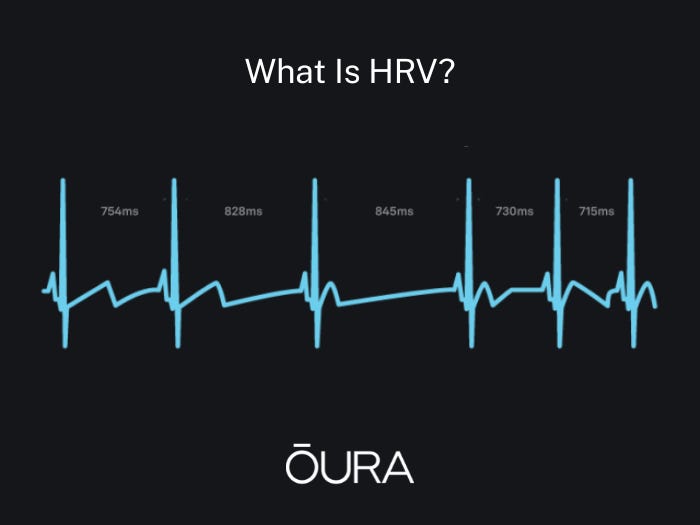
Let’s Go Deep
HRV is simply a measure of the variation in time between each heartbeat. This variation is controlled by a primitive part of the nervous system called the autonomic nervous system (ANS). It works behind the scenes, automatically regulating our heart rate, blood pressure, breathing, and digestion among other key tasks. The ANS is subdivided into two large components: the sympathetic and the parasympathetic nervous system as seen below.
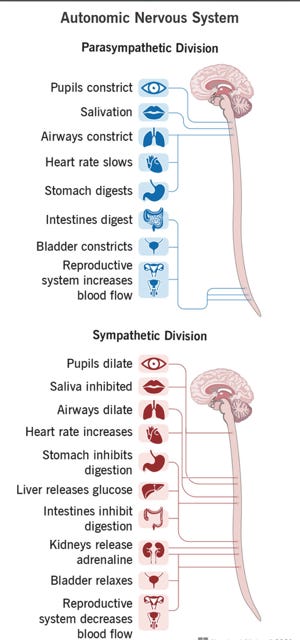
The brain is constantly processing information in a region called the hypothalamus. The ANS provides signals to the hypothalamus, which then instructs the rest of the body either to stimulate or to relax different functions. It responds not only to a poor night of sleep, or that sour interaction with your boss, but also to the exciting news that you got engaged, or to that delicious healthy meal you had for lunch. Our body handles all kinds of stimuli and life goes on. However, if we have persistent instigators such as stress, poor sleep, unhealthy diet, dysfunctional relationships, isolation or solitude, and lack of exercise, this balance may be disrupted, and your fight-or-flight response can shift into overdrive.
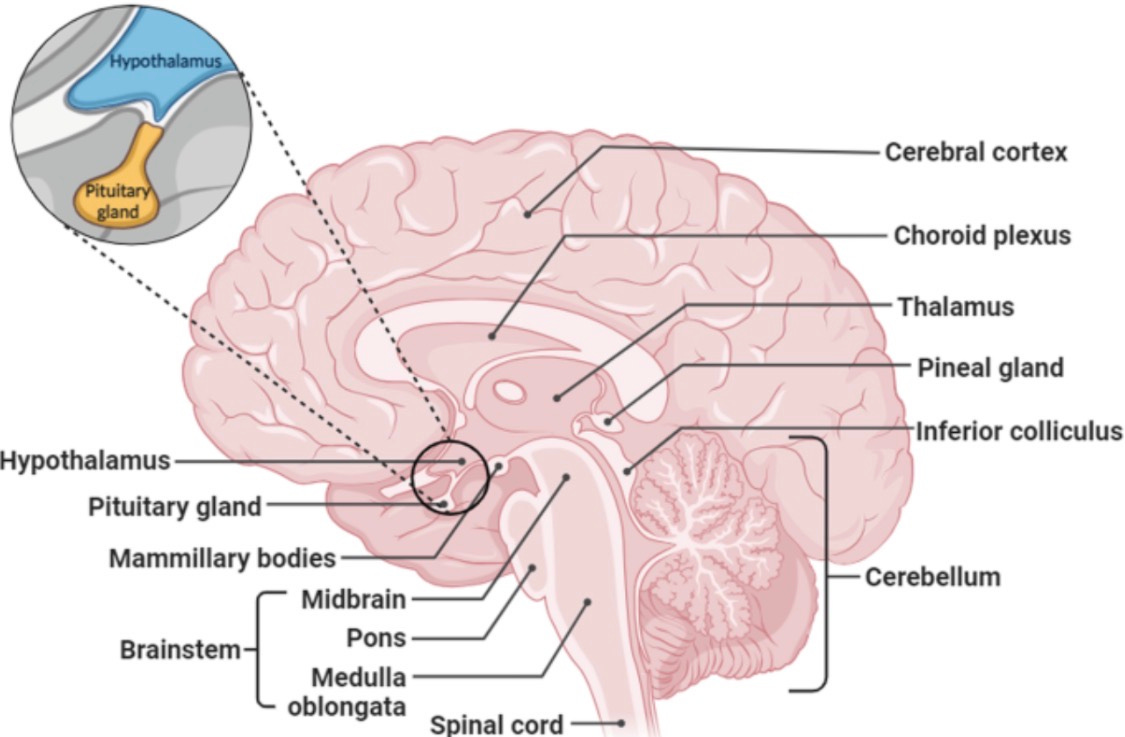
Let’s go a little deeper on the hypothalamus to get a better idea of just how much this thing does. The hypothalamus is responsible for releasing and inhibiting hormones and making sure our body remains in a healthy balanced state, which is called homeostasis. It plays an important role in the endocrine system. The hypothalamus receives messages from multiple areas of the brain and sends a signal to release or inhibit hormones to a structure in our brain called the pituitary gland, known as our “master gland.” The pituitary gland then directs the functions of our thyroid gland, adrenal gland, and reproductive organs in our endocrine system to maintain homeostasis, influence growth, and milk production. It is significantly involved in non-endocrine functions such as regulating our body temperature, controlling our appetite, and regulating our autonomic nervous system (ANS). Our ANS is a system in our body that controls involuntary functions in our body such as our breathing, heart rate, blood pressure, digestion, respiratory rate, and our sexual arousal.
Why do I give you all this about the hypothalamus? To show you that there is a lot going on for both sides. Our bodies are in constant flux as each side, sympathetic and parasympathetic are battling for more time.
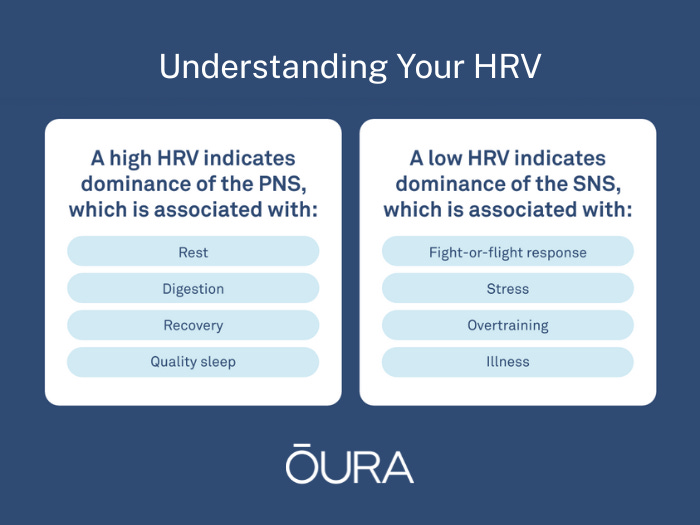
HRV Measures
Your heart rate is a measure of how many times your heart beats within one minute. This can be counted by checking your pulse on your wrist or neck and counting for one minute or by using a heart rate monitor like a fitness watch. An average heart rate for a normal, healthy person is between 60 to 100 beats per minute (BPM) at rest; for an endurance athlete, that number might even drop to 30 to 40 BPM. Mine is around 43.
As discussed, HRV, is the measure of the variation in time between heartbeats, measured in milliseconds. For example, sometimes your heart might beat every 1.2 seconds; other times, it might beat at 0.8 seconds. You need a device to measure that variance in timing. Ideally, you’d monitor your HRV for two to five minutes to see what your average is.
A longer HRV, with more time between heartbeats, is in general more desirable than a shorter HRV because it shows your body can recover faster from stress and that the heart can resume its normal rate after having been sped up due to exercise, stress, illness or something else. It’s an indicator of how your body handles stress, which includes your training efforts.
Factors Impacting Heart Rate Variability
HRV is impacted by a few things, including:
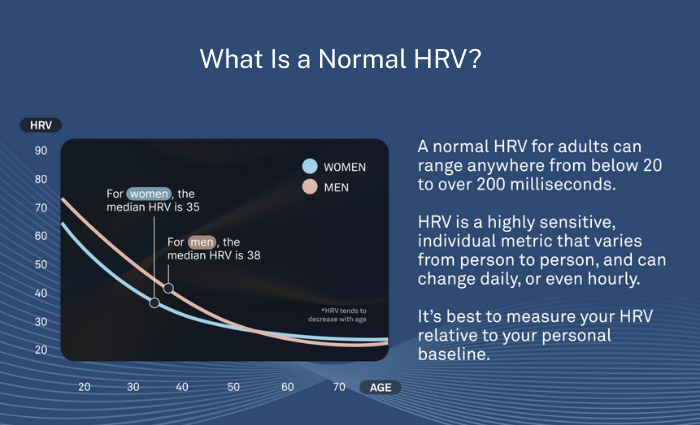
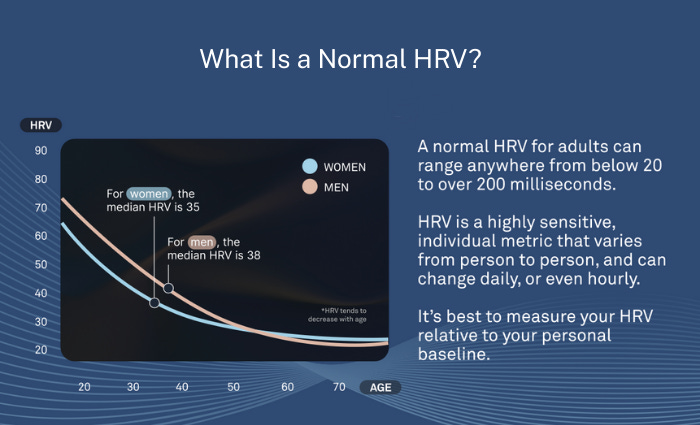
Gender: We know gender influences HRV but reports are controversial. Men tend to show higher HRV numbers than women, but some studies have shown the opposite to be true.
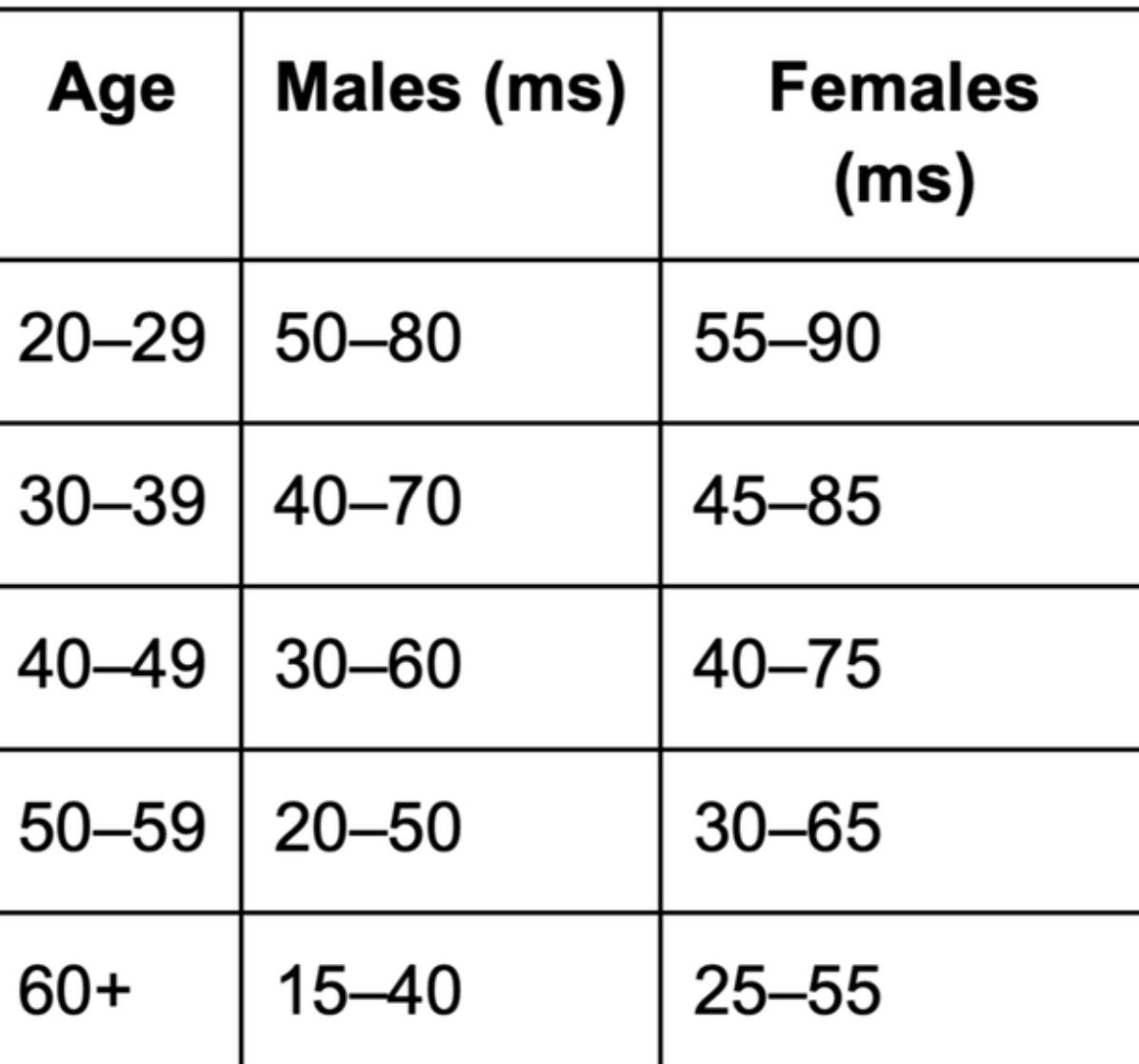
Age: Your HRV decreases as you age. A. 25-year-old male’s normal heart rate variability might be 50 to 100 milliseconds. As that person nears middle age, the number could drop to a range of 35 milliseconds to 60 milliseconds.
Hormones: A woman who is tracking her HRV might notice changes at various times throughout the month when she’s menstruating.
Stress: When you experience stress, the heart has to pump faster. That means there’s less time in between beats, resulting in a shorter HRV.
Sleep: Your body’s 24-hour clock plays a role in HRV. You’ll find the average number changes throughout the day, as well as if you are tired.
Core body temperature: If your body temperature changes when you aren’t feeling well, this can impact your HRV.
Metabolism: Someone who has a metabolic disorder will likely have a lower HRV. Alternatively, the healthier and fitter you are, the likelier you’ll have a higher HRV.
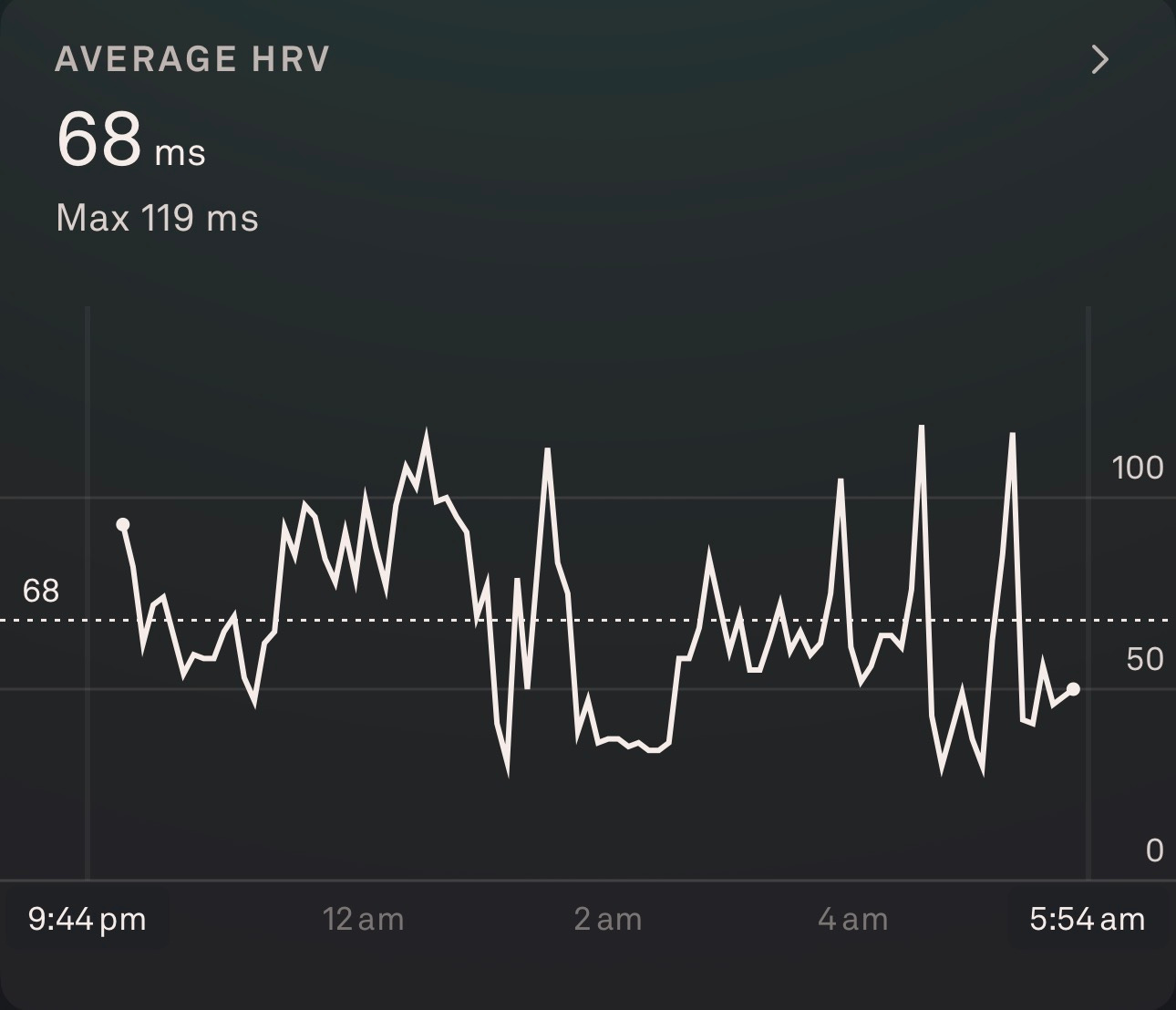
And here is my score recently:
How do we get it?
The gold standard for measuring heart rate variability is an EKG done by a medical professional. After that, the HRV measures within many fitness trackers are thought to be highly reliable at tracking it. Here are some general tips for measurement:
Some HRV monitors come with a chest strap, while others can be worn on your wrist or finger in the form of a ring. Not all heart rate monitors have a heart rate variability tracking component, so check your device or do your research if you’re looking to buy a fitness tracker that measures it.
Measuring for at 5 least minutes, if done in a medical setting, should give you a good average, or over the course of a 24-hour period with a heart rate variability monitor you wear at home.
If you’re using a heart rate variability tracker for the first time, look at your HRV average over the course of a week to learn your baseline. Once you learn your baseline, you’ll have a better idea of what a high or low HRV is for you, then can take steps to modify your routine depending on how you’re tracking.
I’ve been using the Oura ring and finding it very good.
Why do we care?
HRV may offer a noninvasive way to signal imbalances in the autonomic nervous system. Based on data gathered from many people, if the system is in more of a fight-or-flight mode, the variation between subsequent heartbeats tends to be lower. If the system is in more relaxed state, the variation between beats may be higher.
This suggests some interesting possibilities. People who have a high HRV may have greater cardiovascular fitness and may be more resilient to stress. HRV may also provide personal feedback about your lifestyle and help motivate those who are considering taking steps toward a healthier life. You might see a connection to HRV changes as you incorporate more mindfulness, meditation, sleep, and especially physical activity into your life. For those who love data and numbers, this could be a way to track how your nervous system is reacting not only to the environment, but also to your emotions, thoughts, and feelings.
My Final Thoughts
The resilience, flexibility, and balance of our autonomic nervous system is critical to our mental and physical health. Imbalance is associated with inflammation, chronic stress, and chronic disease, including cardiovascular disease and type 2 diabetes, as well as depression and other mental health conditions. Low HRV scores can indicate elevated risks for heart attack and stroke, and are frequently present in people with depression and anxiety disorders. Dominance of the sympathetic nervous system is also linked to sleep problems and sleep disorders, including insomnia and obstructive sleep apnea.
Heart rate variability is a result of both the sympathetic and parasympathetic nervous systems at work simultaneously in the body. It is this push-pull of these two sets of nervous system messages that produces the variation in time between heartbeats. For this reason, HRV is an excellent measure of how well our autonomic nervous system is functioning.